
Japan's Safety Environment
Statistics and Cultural Factors
At Japan Ikigai Trip, every journey is designed so that anyone, including women traveling solo, can explore with peace of mind. Here’s what that means in practice.
How we keep you safe
- Places we’ve checked ourselves. Every stay is somewhere a member of our team or our trusted people has visited or stayed.
- A real person, day or night. WhatsApp and emergency phone support at any hour, from a member of our team who speaks both English and Japanese, and knows your itinerary.
- Designed with solo travelers in mind. Secure check-ins, daytime arrivals where we can, and trusted local guides.
- When plans wobble. We can’t foresee everything, but we’re one message away, so a hiccup stays a hiccup.
- The essentials, made easy. Every leg, emergency numbers, and your nearest help, all in your travel bible.
We don’t just take Japan’s reputation on faith. We look closely at what the independent data shows, from everyday crime to natural disasters to solo travel. Here’s the most recent picture. Here’s what the research says about Japan itself.
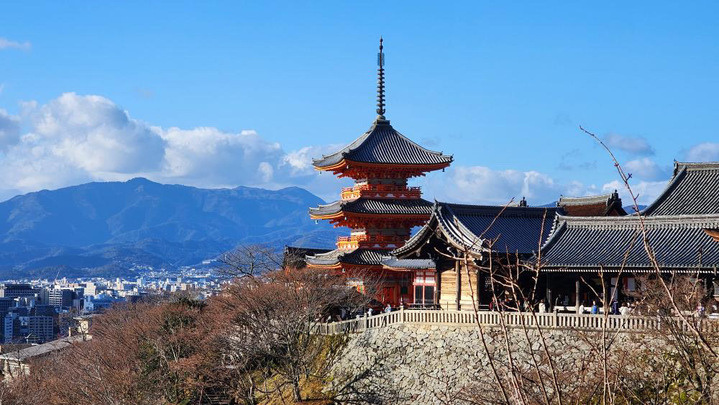
Japan feels easy to move around in. Streets are orderly, transit runs on time, and people tend to treat strangers with quiet respect. Many visitors find they can explore on a whim and still feel secure. You can turn down a narrow lane, follow a scent of food, or stay out a little later without feeling on edge.
That feeling is backed up by the numbers. According to the 2025 Global Peace Index, Japan ranks as the 12th safest country globally and the 2nd safest in Asia, just behind Singapore. In the specific category of safety and security, Japan places even higher, reflecting low violent crime, limited internal conflict, and broadly stable public order.
That said, “safe” doesn’t mean completely risk-free. No destination is, especially when travel involves new places, unfamiliar routines, and a bit of unpredictability. Sometimes that’s part of the appeal. Staying aware of your surroundings and knowing how to handle unexpected situations is still important, no matter where you go.
It’s easy to simply say that Japan is very safe, but we believe context matters. In the sections below, we break down what safety looks like in practice, covering street safety, nightlife, natural disasters, wildlife, solo female travel, and locals’ behavior toward tourists.
Homicide Rate per 100,000 Population
2025 Global Peace Index, Top 15 Safest Countries
Overall score out of 163 countries. Lower is more peaceful.
- 1Iceland1.095
- 2Ireland1.260
- 3New Zealand1.282
- 4Austria1.294
- 5Switzerland1.294
- 6Singapore1.357
- 7Portugal1.371
- 8Denmark1.393
- 9Slovenia1.409
- 10Finland1.420
- 11Czechia1.435
- 12Japan1.440
- 13Malaysia1.469
- =14Netherlands1.491
- =14Canada1.491
For many travelers, safety is one of the first things to consider when choosing a destination, especially when heading somewhere unfamiliar or unexpected. Unsettling stories about theft or scams tend to circulate easily, which can make it hard to know what to realistically expect.
In Japan, the overall picture is reassuring. Violent crime rates are very low, and petty crime, such as pickpocketing or bag snatching, is uncommon compared to many other popular travel destinations. In fact, Japan consistently ranks far below countries like the United States, Canada, the United Kingdom, and Australia in both violent and non-violent crime statistics, and well below the global average.
This doesn’t mean petty crime doesn’t exist at all. The most common issues travelers may encounter are scams, which tend to be concentrated in entertainment and nightlife districts of large cities. In particular, tourists are sometimes targeted by hostesses or promoters who invite them into bars or clubs. These situations can lead to inflated bills or, in some cases, credit card fraud. A simple rule of thumb is to avoid following strangers into venues, especially if you’re being pressured or promised a “special deal.”
In Tokyo, areas such as Kabukicho, Kinshicho, and Shimbashi are known for nightlife-related scams, while in Osaka, Nishinari and parts of Dotonbori are worth navigating with a bit more caution, especially late at night. Outside of major cities, tourist scams are even less common, though basic awareness is always a good idea. For those interested, the Tokyo Metropolitan Government also provides detailed guidance on staying safe in nightlife districts.
Overall, the likelihood of having valuables stolen in Japan is low, particularly when compared to destinations like Paris or Barcelona, which are often associated with pickpocketing hotspots. Many travelers are pleasantly surprised by how relaxed they feel moving around, even in busy urban areas.
- You’re unlikely to need constant vigilance over your belongings
- Walking around with a phone or camera generally feels safe
- Public spaces are orderly, well-lit, and well-monitored
- Traveling independently often feels easier and less stressful than expected
When people think of Japan, a few things tend to come to mind. Sushi, torii gates, and, inevitably, earthquakes. Japan is made up of a chain of islands known as the Japanese Archipelago, located along the Pacific “Ring of Fire,” where several tectonic plates meet. Because of this, earthquakes are a natural part of life here.
In reality, small earthquakes occur quite frequently, and in many cases, they’re barely noticeable or go completely unnoticed by travelers. Daily life continues as normal, and buildings are designed with earthquakes in mind. Still, understanding a few basic safety principles can go a long way in helping you feel prepared and confident, just in case something stronger happens during your trip.
Japan has a highly developed disaster response system. The Japan Meteorological Agency (JMA) issues rapid earthquake and tsunami warnings through multiple channels, including mobile alerts, announcements, and multilingual guidance, designed to reach both residents and visitors as quickly as possible. You can even download the Safety Tips app on your phone to receive reliable disaster information.
Why Japan Is Among the Best-Prepared Countries
- Early warning, in seconds. Japan built the world’s first nationwide Earthquake Early Warning system (2007); its J-Alert network pushes alerts straight to every phone.
- Clear, five-level alerts. A color-coded warning scale tells everyone exactly what to do at each stage.
- Strict seismic building codes. Modern buildings are engineered to ride out major quakes.
- Drilled and ready. Schools, hotels, and workplaces run regular disaster drills, and the Japan Meteorological Agency issues rapid quake and tsunami warnings in multiple languages.
Sources · GFDRR · World Economic Forum (2025) · Nippon.com
- Minor earthquakes are common but rarely disruptive
- Buildings and infrastructure are designed with seismic safety in mind
- Clear procedures and alerts help you know what to do if something happens
- Hotels and public facilities are well-prepared and regularly trained
- A basic understanding of safety steps is usually all you need
We know that many people get mesmerized by the hustle and bustle of the big cities. The crowds, neon lights, arcades, and shopping streets are definitely part of Japan’s popularity and charm. But outside of the big cities, the country has a vast variety of scenery, ranging from sandy beaches to mountainous ranges, lush greenery, riverbeds, and grasslands. Many people enjoy outdoor activities such as skiing, hiking, and nature walks. But the outdoors come with their own set of risks.
In recent years, there has been an increase in reported bear sightings and encounters in Japan, particularly in Hokkaido and rural, mountainous areas. It is also more common for bears to enter less-lively residential areas in hopes of finding food. The map shows the bear sightings recorded in 2025 by month. It might look scary, but these sightings include cases of someone seeing a bear from their window, while driving, or security camera footage. Japanese locals are very vigilant about reporting bear sightings to alert authorities and enhance public safety.
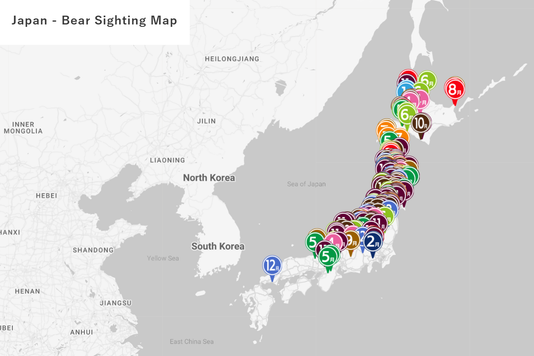
Japan Bear Sighting Map
Japan is home to two bear species, the brown bear (found mainly in Hokkaido) and the Asiatic black bear (found in parts of Honshu). Serious incidents are still rare, but awareness is important, especially for travelers exploring quieter, rural areas.

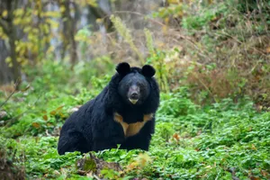
Most bear encounters happen when a bear is startled, not because it is actively seeking humans. Bears generally avoid people when they are aware of human presence. Situations involving surprise encounters, quiet solo hikers, or mother bears with cubs carry a higher risk.
To reduce the chance of an encounter:
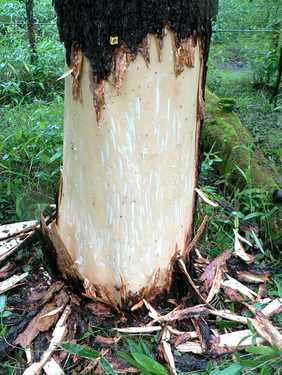
- Stay calm and slowly back away
- Do not turn your back to the bear
- Do not run away, as the bear might view you as prey
- Avoid sudden movements and direct eye contact
- If a bear approaches or attacks, protect your head and neck with your arms and backpack, and use nearby terrain, such as rocks or fallen trees, for cover until the bear retreats
If you would ever like to check the most recent information for yourself, public resources, such as Kumamap and local advisories, are widely available and frequently updated.
- Wildlife encounters are rare and usually avoidable, and simple precautions greatly reduce the chance of problems
- Most trips involve no wildlife risk at all
- Local authorities actively monitor and share safety information
- Exploring rural Japan can be both safe and deeply rewarding
Traveling alone as a woman can feel like a big step, especially if it’s your first solo trip or your first time visiting Japan. Choosing the right destination matters, and feeling safe enough to enjoy the unknown is a big part of the experience.
The reassuring news is that Japan is widely regarded as one of the safest destinations in the world for solo female travelers. Street harassment, such as catcalling, is extremely rare, and many women report feeling comfortable walking alone, even at night, particularly in major cities like Tokyo and Kyoto. While basic travel awareness is always important, countless travel testimonials describe solo travel in Japan as calm, respectful, and refreshingly stress-free.
At the same time, it’s important to be realistic. Japan isn’t perfect, and occasional issues do exist. Public transportation, especially during rush hour, can become extremely crowded, and there have been reports of unwanted physical contact on trains. While this is uncommon, it is a known issue and one that should be acknowledged.
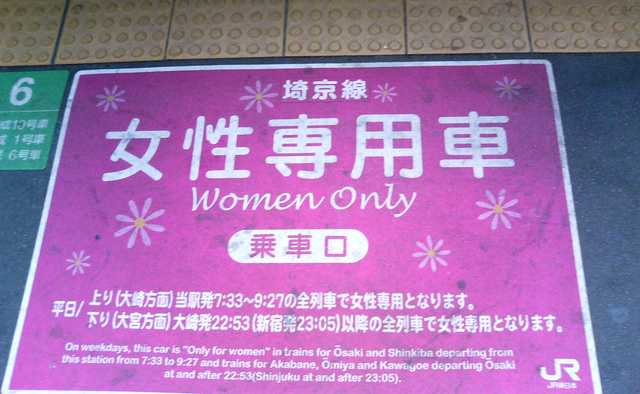
To help address this, women-only train cars are available during peak commuting times and are clearly marked with pink signs on station platforms. Many travelers choose to use them simply for extra peace of mind.
- Traveling solo as a woman in Japan is widely considered comfortable and low-stress
- Moving around alone, even in the evenings, generally feels safe in most areas
- Public transport is reliable and well-organized, with options like women-only cars for added peace of mind
“Did this solo… a quiet countryside town with beautiful scenery and barely any tourists. One day I rented a bike and rode through fields and tiny villages. Super peaceful… everyone was kind and tried their best to help.”
One of the first things many travelers notice in Japan is how people treat one another in public. Daily life is shaped by a shared respect, order, personal space, and consideration for others, and this strongly influences how locals interact with visitors. Japan is not a culture of overt friendliness or casual small talk with strangers, but it places a high value on mutual respect.
Toward tourists, locals are generally polite, helpful, and non-confrontational. You may not always experience enthusiastic warmth, but outright rudeness is very uncommon. Help is often offered quietly rather than proactively, such as a station attendant patiently guiding you with gestures or a waiter taking extra time when you order.
Views on race and foreign visitors can feel nuanced. Japan is still a largely homogeneous society, and many people, especially in the countryside, have limited daily exposure to foreigners. This can result in curiosity, brief stares, or awkward moments rather than hostility. Explicit racism or open confrontation is rare, though subtle differences in treatment may occasionally occur, due to language barriers, uncertainty, or personal bias.
Etiquette plays a particularly important role. Speaking softly on public transport, queuing properly, removing shoes where required, and following posted rules signal respect and awareness of shared space. Travelers who make even modest efforts to observe these norms are often met with noticeably warmer and more accommodating responses.
Language barriers exist, particularly outside major cities, but they are rarely a source of tension. Many locals feel shy about their English ability, and a smile, patience, or a few basic Japanese phrases can quickly ease interactions.
- Interactions are usually polite, calm, and respectful, even if brief
- Following local etiquette greatly improves how you are treated
- Curiosity is common, hostility and open confrontation are very rare, but still existing sadly
What we do:
Japan Ikigai Trip is a mystery travel service that designs deeply personal, self-guided journeys across Japan. The full itinerary is ready within 2 weeks of booking, to open then or keep as a surprise until the trip begins. Each trip is crafted around how you travel, your pace, interests, and curiosity, so you can explore with confidence, not stress. We take the weight of planning off your shoulders and guide travelers beyond tourist hotspots, creating meaningful experiences that foster genuine connection and fresh perspectives on Japan.
- Fill out the Mystery Trip Questionnaire from the “Design my trip” button on our website to tell us about your travel preferences
- We will choose your destination and share a general description of what to expect on your trip, without revealing specific details
- If you decide to book, we will begin to curate your itinerary and reserve all necessary bookings
- Leading up to your journey, you will receive trip documents and personalized items, such as a packing list, to help you prepare and ready for your Japan trip
- Within 2 weeks of booking, your full itinerary is ready, with your stays booked. Open it then, or keep it a surprise until your trip begins
- You’ll receive a travel brochure with the detailed itinerary at your first hotel in Japan
Japan is one of the safest countries in the world. Our job is to make sure your trip feels that way too, with places we know first-hand, a real person who answers at any hour, and a plan that bends without breaking. The destination is a surprise. The care behind it never is.
Ready to Explore Japan?
New here? Start where it makes sense for you.
This page is about Japan itself. If you would like to know what we do with all of this, these are the four things people usually want next.